
If a foreigner dies owning assets in Spain, we must refer to the European
Inheritance Regulation of 2012, applicable to people who died after 17 August
2015.
As a general rule, this regulation provides that the inheritance of an EU national
will be governed by the law of the country where the person had his or her usual
residence. This rule applies to the 27 member states of the European Union
(EU), except for the United Kingdom, Ireland and Denmark, which are
considered third countries. However, it does apply to the citizens of these
countries who reside in any member state of the EU.
However, there are exceptions, one of them is when the person clearly and
unequivocally decides in their last will that they wish to apply the law of their
country to the inheritance. In this case, even if the deceased was resident in
Spain at the moment of his or her death, the inheritance process for assets in
Spain would be governed by the law of his or her country.
DOCUMENTS NEEDED FOR THE INHERITANCE PROCESS IN SPAIN
To confirm whether a person signed a will in Spain, it is necessary to apply for a
certificate of wills from the Ministry of Justice. Through this application, the
Registry of Wills will certify if the deceased signed a will in Spain, when it was
signed and before which notary. Once this certificate has been received, if the
deceased signed a will, the heir (or his lawyer) may request a copy from the
notary office where it was signed.
It is important to note that, in Spain, for a will to be valid, it must be signed
before a Spanish notary. This notary will notify the Registry of Wills that a
person has signed a will at the notary office. In certain cases the person is
unable to travel to the notary, mainly due to illness or lack of mobility. In that
case a local notary can also make a house or hospital visit.
It is possible to sign a will without a notary being present but we won’t go further
into this case, as this is very infrequent in Spain and would require a judicial
procedure for legalisation to be considered valid.
Making a Spanish will avoids time-consuming and expensive legal issues that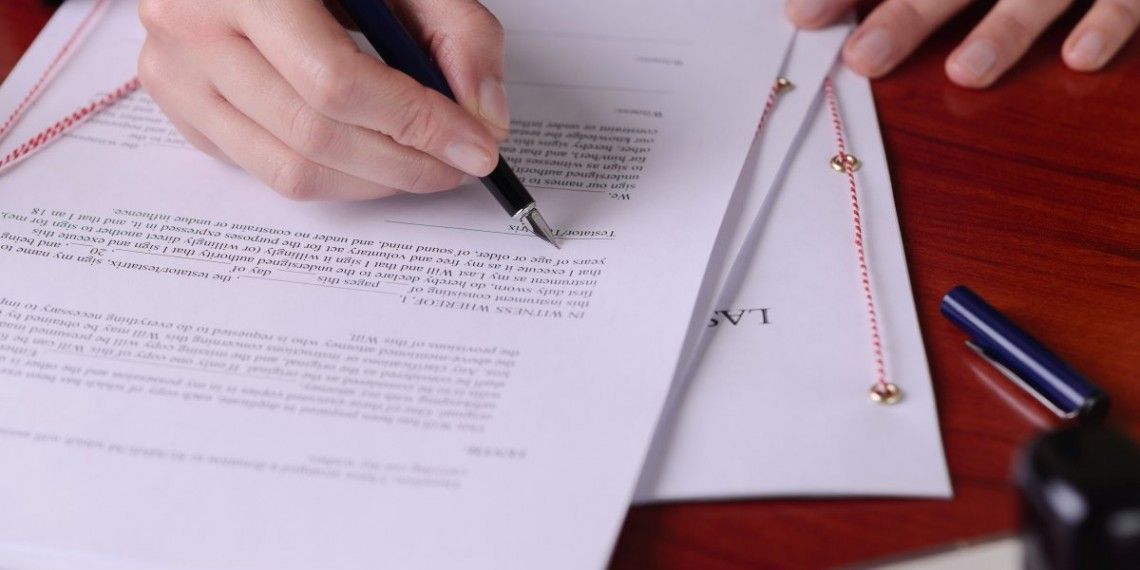
your heirs will have to resolve. If you have assets in Spain, even if you have a
will in your country of origin, it is always advisable for a will to be signed in
Spain covering only the assets located in Spanish territory. A will has no tax
advantages, but it does help heirs deal with the bureaucracy of the inheritance
process that will take place in Spain after your death.
If the deceased has assets in Spain and the inheritance is being handled
according to the law of the country of the deceased, or that of his or her
residence outside of Spain, the heirs should get different legal documents from
the country of origin: European Certificate of Succession in EU countries or
Certificate of Succession or Probate in EU countries and non-European
countries. It will depend on the personal circumstances of the deceased.
In addition to the documents mentioned above, it is also necessary to obtain an
original death certificate and the certificate of wills in the country of residency.
If the deceased had property in Spain, the Public Deed of Acceptance and
Adjudication of Inheritance must be signed by the heirs before a Spanish notary.
This document is where they receive the title of the property and the other
assets that the deceased may have in Spain. This could be a house, but also a
bank account or a vehicle.
It is also important to know that Inheritors should apply for a NIE number (if they
do not have one), and will have to give power of attorney to the Spanish lawyer
representing them in order to arrange it.
Once this deed has been signed, the Inheritance Tax return will be submitted
and the property will then be registered with the appropriate Property Register,
so that the heirs become the official owners of the property or properties of the
deceased.
It is always necessary to file an Inheritance Tax return in Spain for any type of
inheritance. In other words, Inheritance Tax must always be paid in Spain for
properties and assets located in Spain, regardless of whether Spanish law or
the law of a different country applies. Liability for Inheritance Tax arises from the
simple fact of inheriting assets located within Spanish territory.
In Spain, each autonomous region is free to establish its own Inheritance Tax
regulations and there are significant differences in taxation between them. For
this reason, when buying a property for either personal or investment use, it is
wise to investigate the Inheritance Tax rate in the region where you intend to
purchase the property.
The statute of limitation on Inheritance Tax is four years, which means that the
State cannot collect any tax on the assets you leave to your heirs more than
four years after your death. Spanish law dictates that Inheritance Tax should be
declared within six months of the date of death. This six-month period is then
added to the statute of limitations, so in effect the period stretches for four years
and six months.
Finally, it will have to be checked whether the heirs will have to pay Plusvalía
tax.
In Spain, there is no legal obligation to hire a lawyer for procedures of this type,
but not only would it be difficult for someone to complete this process without
the advice of a lawyer specialising in these matters because a lot of
documentation and information has to be obtained. In addition to this, a lawyer
will help you to obtain a correct tax assessment of the property being inherited
which may be key if the heirs intend to sell the property later on and will also be
able to inform you about any inheritance taxes.
Finally, it should not be forgotten that if you are going to inherit a property in
Spain, you will have to sign an inheritance deed before a notary. Therefore a
lawyer will be vital in assisting you not only with all the legal formalites but also
with the tax implications of the inheritance, particularly if you intend to sell it in
the near future.